 scenario-wedding-marketing
 August 25, 2026
 scenario-wedding-marketing
A destination wedding in Kerala isn’t just about the wedding day.
It begins when the first guest arrives and continues until the final goodbye. For couples bringing their families and friends to Kerala, those additional days create an opportunity to turn the celebration into a complete experience rather than a single event.
A well-planned Destination Wedding in Kerala gives guests time to settle in, enjoy the destination, participate in different celebrations, and spend meaningful time with family and friends.
But there is a fine balance.
Too many events can leave guests exhausted. Too little structure can make the celebration feel disconnected. The ideal Kerala destination wedding itinerary gives every event a purpose while leaving enough breathing room for guests to relax and enjoy themselves.
At Scenario Wedding Planner, we believe a wedding itinerary should feel effortless to the guest-even though countless details are being coordinated behind the scenes.
This guide offers a practical three-day framework that can be adapted according to your wedding traditions, guest count, venue, season, and celebration style.
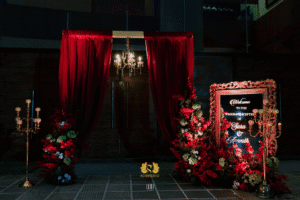
A traditional wedding can sometimes feel like a race against the clock.
Guests arrive, ceremonies begin, photographs happen, dinner is served, and before anyone realizes it, the wedding is over.
A destination wedding gives you something different: time.
Three days allow couples to divide their celebrations into distinct experiences instead of trying to fit everything into a single schedule.
A typical structure could be:
Day 1: Welcome and connection
Day 2: Celebration and entertainment
Day 3: Ceremony and wedding reception
This gives guests time to settle in before the main celebrations begin and creates opportunities for the couple to spend meaningful time with their families.
It also allows each event to have its own atmosphere.
A relaxed welcome dinner doesn’t need the same production as a Sangeet.
A traditional morning ceremony doesn’t need the same visual language as an evening reception.
Each event can have its own personality while remaining part of one larger wedding story.
Planning a Destination Wedding in Kerala is about creating a natural flow between arrival, celebration, relaxation, and the wedding itself.
Before finalizing the itinerary, consider:
The itinerary should have a clear rhythm.
Guests should know what is happening without feeling as though every minute of their stay has been scheduled.
For example, you might begin with a relaxed arrival day, gradually increase the energy on the second day, and reserve the final day for the main wedding and reception.
The result is a celebration that feels intentional rather than crowded.
One of the biggest mistakes couples make when planning destination weddings is assuming guests want to attend something every hour.
They don’t.
Your guests have travelled to celebrate with you, but they also want time to relax, explore the destination, enjoy the resort, and catch up with relatives they may not have seen for years.
A good itinerary should therefore include white space.
That could mean:
The objective isn’t to maximize the number of events.
It’s to maximize the quality of the experience.

The first day should not feel like the wedding has already started.
It should feel like the beginning of a holiday that happens to become a wedding celebration.
Guests may arrive at different times, particularly when families are travelling from different cities or countries. Your itinerary should therefore be designed around flexibility.
The guest experience begins before they reach the venue.
A well-planned arrival can include:
Guests should know where they need to go without constantly having to ask someone.
The arrival experience should feel organized without feeling overly formal.
A welcome hamper should do more than look beautiful sitting in a guest’s room.
Guests may arrive after a long flight, road journey, or late-night transfer. They may be hungry, thirsty, tired, or simply looking for something familiar before they settle in.
The best welcome hampers combine personal touches with practical essentials.
You don’t need to include everything below. Choose according to your destination, guest profile, wedding season, and preferences.
This is particularly useful for guests arriving late or those who simply want something familiar in their room.
Include at least one item that can be eaten immediately without preparation.
A signature Kerala sweet or snack can introduce guests to the destination from the moment they arrive.
For Kerala’s warm and humid climate, wet wipes, sunscreen, hydration products, and insect repellent can be particularly useful.
Include a beautifully designed:
along with:
For an NRI wedding, a small “Welcome to Kerala” guide can introduce guests to local customs, food, weather, transportation, and cultural experiences.
Finally, include something that says:
“This was prepared especially for you.”
It could be:
The best hampers don’t necessarily have the most items.
They have the right items.
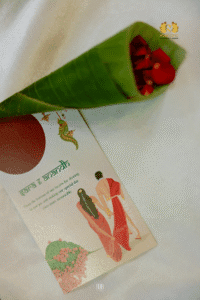
For couples looking for a simple and practical combination, consider:
This gives guests something to drink, eat, use, read, and remember.
If children are attending the wedding, consider creating a separate kids’ kit.
This can turn a potentially boring check-in period into something exciting for younger guests.
Don’t schedule an important event immediately after guest arrival.
Give people time to:
This small window can make a huge difference to the overall guest experience.
Now the wedding can officially begin.
The welcome event should be relaxed rather than highly structured.
Depending on the couple’s preferences, this could be:
Traditional music, local cuisine, lamps, floral arrangements, and cultural performances.
An outdoor gathering with music, dining, and the natural beauty of Kerala as the backdrop.
A more intimate gathering for close family and friends.
A contemporary celebration based around the couple’s story, travel experiences, or shared interests.
The objective is simple:
Get everyone comfortable with each other before the larger celebrations begin.
Day 2 is where the energy begins to rise.
This is the ideal day for your pre-wedding celebrations because guests have already arrived and had time to settle in.
Don’t begin too early.
A leisurely breakfast gives guests time to recover from travel and enjoy the property.
Optional activities can include:
Not everyone needs to participate.
That’s important.
Optional experiences should remain optional so guests can choose how they want to spend their morning.
The afternoon can be reserved for a more intimate celebration.
Depending on the family’s traditions, this could be:
These events don’t need massive production.
In fact, intimate décor often works better.
Think:
The goal is to create an environment where people naturally interact.
This is one of the most important parts of the itinerary.
Schedule a break.
Guests should have enough time to return to their rooms, rest, change, and prepare for the evening.
The bride and groom will particularly appreciate this breathing space.

Now the energy changes completely.
The Sangeet can become the most theatrical event of the wedding weekend.
This is where you can introduce:
The event should feel like a progression rather than a collection of performances.
Start with family.
Move into the couple’s story.
Build the energy.
Then bring everyone together for the final celebration.
Dinner doesn’t necessarily need to signal the end of the evening.
Depending on the guest profile, you can transition into:
Older family members may want to retire early while younger guests continue the celebration.
A good wedding plan accommodates both.
This is the emotional centre of the entire destination wedding.
Because the previous two days have already built anticipation, the wedding day can focus entirely on the ceremony and celebration.
While the couple gets ready, guests can enjoy breakfast.
This is also when the photography team can capture:
The getting-ready experience should not feel rushed.
Depending on the family’s traditions, the groom’s arrival can become one of the day’s first major experiences.
Options include:
The entry should reflect the couple rather than simply following a trend.
Now the focus shifts completely.
The ceremony space should feel distinct from the previous evening.
If the Sangeet was dramatic, the wedding can be more serene.
If the reception will be glamorous, the ceremony can embrace tradition.
This contrast creates visual variety throughout the wedding weekend.
The ceremony experience involves much more than décor.
Behind the scenes, the planning team coordinates:
Guests should experience the ceremony as a beautiful, uninterrupted moment.
They should never see the logistical complexity behind it.
After the ceremony, guests can move into lunch or refreshments.
This is a good opportunity to slow the pace again.
Family photographs can be scheduled without rushing the couple into the next event.
The couple can spend time with close family.
Guests can relax.
The reception provides an opportunity to transform the visual language once again.
If the wedding ceremony was traditional, the reception can be contemporary.
If the ceremony was minimalist, the reception can embrace grandeur.
The evening could include:
The reception is the final major celebration, so the production can build toward a memorable finale.
Although technically outside the three-day celebration, a farewell morning deserves planning.
After several days of celebrations, guests may be tired.
Keep the farewell simple.
A relaxed breakfast provides one final opportunity for everyone to meet.
You could include:
For guests with later departures, optional activities can be arranged.
A thoughtful farewell allows the wedding experience to end as warmly as it began.
| Time | Day 1 | Day 2 | Day 3 |
| Morning | Guest arrivals | Leisure breakfast | Bridal & groom preparations |
| Late Morning | Check-in | Optional activities | Guest breakfast |
| Afternoon | Relaxation | Mehendi / Haldi | Groom arrival |
| Late Afternoon | Guest interaction | Break | Wedding ceremony |
| Evening | Welcome dinner | Sangeet | Reception |
| Night | Casual gathering | Dinner / After-party | Dinner / Celebration |
This is a framework-not a fixed formula.
The exact timing should change according to the venue, ceremony requirements, weather, guest profile, and cultural traditions.
A three-day wedding can become repetitive if every function looks and feels the same.
The secret is visual and experiential differentiation.
For example:
Mood: Warm & welcoming
Design: Natural and relaxed
Entertainment: Acoustic / cultural
Dress Code: Smart casual or resort wear
Mood: Vibrant & celebratory
Design: Colorful and energetic
Entertainment: Performances / DJ
Dress Code: Festive
Mood: Sacred → glamorous
Design: Traditional ceremony followed by elevated reception
Entertainment: Live performance / DJ
Dress Code: Wedding attire
This gives guests a sense that they are experiencing three different chapters of the same wedding story.
Guests may never know who arranged their airport transfer.
They may not know how their room allocation was managed.
They may never see the planning sheets behind the celebration.
But they will notice if something goes wrong.
That’s why guest management is one of the most important components of a destination wedding.
A good hospitality plan should cover:
The goal is to make guests feel looked after without feeling managed.
For a Destination Wedding in Kerala, thoughtful hospitality is particularly important when guests are arriving from different cities or countries.
Clear communication before arrival, smooth transfers, comfortable accommodation, and accessible assistance can make the entire experience feel seamless.
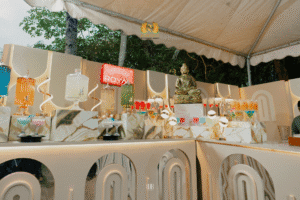
When guests stay together for several days, the wedding menu is not limited to formal lunches and dinners. People will be hungry between events. Someone may wake up early. Someone may arrive late. Children may want something familiar. An elderly guest may prefer a simple meal. Someone may return to the room after the Sangeet at midnight and want a cup of tea.
This is why a destination wedding needs a hospitality food plan, not just a wedding menu.
Offer a mix of Kerala, Indian, and continental options.
Keep a small refreshment station available.
Options can include:
Lunch is an opportunity to introduce guests to Kerala’s culinary identity.
For a traditional celebration, a Kerala Sadya can become an experience in itself.
For a mixed guest list, consider:
Indian: Dal, paneer, vegetable curry, chicken, fish, rice, roti and naan.
Asian: Fried rice, noodles, stir-fried vegetables and Asian sauces.
Continental: Grilled vegetables, pasta, salads, grilled chicken or fish and bread.
A destination wedding doesn’t need to choose between local and international food.
Offer both.
This is one of the most useful food services during a multi-day wedding.
Before the Sangeet, reception, or evening celebration, guests often need something light.
Consider:
Keep these small and easy to eat while standing so guests can enjoy them while socializing.
This is one addition worth considering for a destination wedding.
Not everyone follows the wedding schedule.
Some guests wake up early.
Some return to their rooms late at night.
Some simply need coffee before they become social.
A 24-hour tea and coffee station can be placed in a common hospitality area or lounge.
For international guests, clearly label decaffeinated, dairy-free, and sugar-free options where available.
This is particularly useful after the Sangeet, reception, or after-party.
Late-night food doesn’t need to be elaborate.
It needs to be available when people actually want it.
For weddings with families and children, create a simple familiar-food section.
Options can include:
Before the wedding, collect information about:
The important part isn’t simply providing alternatives.
Label them clearly.
Guests should know what they’re eating without having to ask at every meal.
Your guest list isn’t simply a number.
It is a collection of different people with different needs.
An elderly family member may need more rest between functions.
Parents may need time with relatives.
Children may need activities.
International guests may need help understanding local customs.
Young guests may want late-night entertainment.
A thoughtful itinerary accounts for these differences.
Build flexibility into the schedule.
Don’t make every experience compulsory.
Offer choices wherever possible.
For example:
Yoga | Breakfast | Pool | Spa | Leisure
Mehendi | Local Experience | Resort Time
Main Wedding Event
This makes the destination wedding feel like a holiday rather than an obligation.
Guests who stayed up late at the Sangeet won’t appreciate an early morning event unless it is culturally necessary.
Give people time to breathe.
Not every function needs a massive stage and production setup.
Contrast creates impact.
Moving a large group of guests requires considerably more coordination than moving a small family.
Free time is part of the experience.
Outdoor celebrations need a Plan B.
More events don’t automatically mean a better wedding.
At Scenario Wedding Planner, we don’t begin by filling a calendar with events.
We begin by understanding the people.
Who is travelling?
What traditions need to be included?
How many events does the family actually want?
What does the couple want their guests to experience?
Which moments deserve grandeur?
Which moments should remain intimate?
Once those questions are answered, we build the wedding flow around them.
Our team coordinates the moving parts—from venue operations and guest hospitality to décor, entertainment, technical production, transportation, and vendor management—so that the final itinerary feels effortless.
The objective isn’t to keep everyone busy.
It’s to create the right moments at the right time.
With more than 18 years of experience and 3,000+ weddings curated, Scenario Wedding Planner brings the experience required to manage the details behind a complex destination celebration while keeping the couple and their families focused on enjoying it.
Is three days enough for a Destination Wedding in Kerala?
Yes. Three days can provide enough time for welcome celebrations, pre-wedding functions, the main wedding, and a reception while still allowing guests some personal time.
What should happen on the first day of a destination wedding?
The first day should generally focus on guest arrivals, check-in, relaxation, and a welcome experience. Avoid scheduling the most important celebration immediately after guests arrive.
How many events should a three-day wedding include?
There is no fixed number. A typical itinerary may include a welcome event, Mehendi or Haldi, Sangeet, wedding ceremony, reception, and farewell breakfast. The exact combination should depend on the couple and family.
Should guests have free time during a destination wedding?
Absolutely. Free time allows guests to rest, enjoy the resort, explore the destination, and spend informal time with family and friends.
How do you plan a destination wedding for NRI guests?
Consider airport transfers, accommodation, time-zone differences, local customs, dietary requirements, clear communication, and enough downtime after international travel.
Should the wedding ceremony and reception be on the same day?
They can be, but they don’t have to be. Combining them can create a traditional wedding-day flow, while separating them allows more time for guests and a stronger change in atmosphere.
What happens if it rains during an outdoor wedding?
A professional destination wedding plan should include a detailed backup location and contingency plan for décor, sound, lighting, guest movement, and transportation.
What should be included in a destination wedding welcome hamper?
A practical hamper can include bottled water, drinks, chocolates, ready-to-eat snacks, tea and coffee, personal-care essentials, travel necessities, the wedding itinerary, emergency contacts, and a personalized welcome note.
How should food be planned for a three-day destination wedding?
Plan beyond the main meals. Consider breakfast, mid-morning refreshments, lunch, tea-time snacks, event canapés, dinner, a 24-hour tea and coffee counter, late-night food, children’s options, and dietary requirements.
Can Scenario Wedding Planner create a customized wedding itinerary?
Yes. Every itinerary should be adapted to the couple, family traditions, guest profile, venue, number of events, and overall celebration style.
The best destination wedding itinerary isn’t the one with the most events.
It is the one where every event feels like it belongs.
Guests arrive and feel welcomed.
They have time to settle in.
The celebrations gradually build.
The Sangeet brings everyone together.
The wedding ceremony creates a meaningful pause.
The reception becomes the final celebration.
And somewhere between all of those planned moments, families have conversations, friends laugh together, grandparents meet new generations, and memories happen that no timeline could have predicted.
That’s what makes a destination wedding different from a wedding that simply happens at a destination.
At Scenario Wedding Planner, we believe the itinerary should be designed around the experience—not the other way around.
From the first airport pickup to the final farewell breakfast, every touchpoint is an opportunity to make guests feel welcomed, comfortable, and part of the celebration.
Get Your Wedding Curated by Scenario Wedding Planner
Planning a Destination Wedding in Kerala?
Let our team help you create the destination, itinerary, guest experience, and celebrations that bring your vision together.
WhatsApp us now to get your wedding curated.